
Herbicide-Tolerant Innovations for Soybeans - 2020
Nov 09, 2020
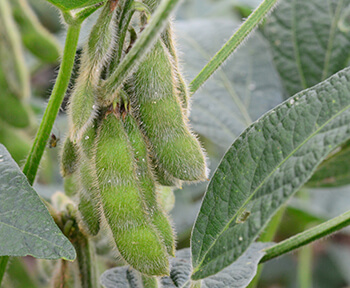
Written by Robert D. Cossar, WinField United’s technical seed agronomy manager, shares his insights on innovations in the soybean industry.
The soybean industry is experiencing another round of herbicide-tolerant innovation. For 13 years following its introduction in 1996, Round-up Ready (RR1) was the only traited product on the market, including the introduction of the improved Round-Ready to Yield (RR2). In 2009, Liberty Link (LL) ushered in a competing weed control system in the form of glufosiante tolerance. However, the weed spectrum continued to evolve through increased selection pressure — to the point escapes were occurring on a regular basis — and growers were forced once again to cultivate other means for weed control to supplement the traited herbicide applications. The agriculture industry has sought to combat this issue with the introduction of new trait technologies and additional herbicide options.
The first of these new technologies was in the form of the Xtend platform commercialized in 2015. The Xtend trait coupled the RR2 technology with the dicamba molecule (Xtend or Engenia chemistry), allowing for an additional mode of action for in-season use. However, growers were still forced to select either the Xtend or Liberty platform since there was no cross tolerance between the two traits.
In 2018, Bayer now BASF, introduced LLGT27 giving growers the first-time option to spray both Liberty and/or Glyphosate herbicide on the same field. Due to late approvals, the first planting of this trait could not occur in mass until 2019. At the same time BASF was working to commercialize LLGT27, Dow AgSciences (now part of Corteva) was seeking approval of their Enlist trait technology, which would add for the first time a third herbicide mode of action to the soybean plant. Also, with the addition of 2,4-D choline, growers can now use Enlist Duo or Enlist One, along with glyphosate and glufosiante to control weeds. Lastly, Bayer is seeking full deregulation and approval of their XtendFLex trait platform consisting of glyphosate, glufosiante, and dicamba (Xtend or Engenia) by early summer of 2020.
As these new technologies continue to gain market share with growers, selecting the right genetics and knowing how to manage them is as important as ever. WinField United’s CROPLAN brand continues to be at the forefront of introducing new traits in genetics suited for all yield levels and growing environments of a given farm. In addition, their extensive Answer Plot system and research lab gives your local Co-op agronomists industry-leading expertise and products to help you optimize your soybean crop.
For more information about selecting and managing these new soybean innovations, contact your local Co-op.
The soybean industry is experiencing another round of herbicide-tolerant innovation. For 13 years following its introduction in 1996, Round-up Ready (RR1) was the only traited product on the market, including the introduction of the improved Round-Ready to Yield (RR2). In 2009, Liberty Link (LL) ushered in a competing weed control system in the form of glufosiante tolerance. However, the weed spectrum continued to evolve through increased selection pressure — to the point escapes were occurring on a regular basis — and growers were forced once again to cultivate other means for weed control to supplement the traited herbicide applications. The agriculture industry has sought to combat this issue with the introduction of new trait technologies and additional herbicide options.
The first of these new technologies was in the form of the Xtend platform commercialized in 2015. The Xtend trait coupled the RR2 technology with the dicamba molecule (Xtend or Engenia chemistry), allowing for an additional mode of action for in-season use. However, growers were still forced to select either the Xtend or Liberty platform since there was no cross tolerance between the two traits.
In 2018, Bayer now BASF, introduced LLGT27 giving growers the first-time option to spray both Liberty and/or Glyphosate herbicide on the same field. Due to late approvals, the first planting of this trait could not occur in mass until 2019. At the same time BASF was working to commercialize LLGT27, Dow AgSciences (now part of Corteva) was seeking approval of their Enlist trait technology, which would add for the first time a third herbicide mode of action to the soybean plant. Also, with the addition of 2,4-D choline, growers can now use Enlist Duo or Enlist One, along with glyphosate and glufosiante to control weeds. Lastly, Bayer is seeking full deregulation and approval of their XtendFLex trait platform consisting of glyphosate, glufosiante, and dicamba (Xtend or Engenia) by early summer of 2020.
As these new technologies continue to gain market share with growers, selecting the right genetics and knowing how to manage them is as important as ever. WinField United’s CROPLAN brand continues to be at the forefront of introducing new traits in genetics suited for all yield levels and growing environments of a given farm. In addition, their extensive Answer Plot system and research lab gives your local Co-op agronomists industry-leading expertise and products to help you optimize your soybean crop.
For more information about selecting and managing these new soybean innovations, contact your local Co-op.