
Tips for the Proper Rabbit Diet
Apr 20, 2020
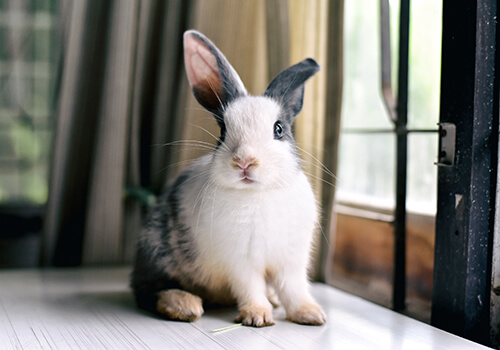
The basis for the best ration for rabbits consist of high-quality pellets and fresh, clean water, along with limited fresh vegetables and treats.
Starting with pellets –
Pellets should be fortified with digestible fiber and balanced specifically for leporids (rabbits) as opposed to straight alfalfa pellets. All ingredients should be of high quality to insure proper digestibility for nutrient availability. If pellets contain ample soluble fiber, feeding hay is not necessary. However, if offering hay, make sure it is high quality, finer stem, and leafy.
Feeding vegetables –
Offering vegetables as a treat is a good addition to proper rabbit rations, and the animal can be picky if these vegetables are not fresh. The following are acceptable for rabbits: alfalfa, clover, broccoli, collard greens, carrots/carrot tops, dandelion greens, kale, mustard greens, parsley, and spinach. All of these have a considerably good Vitamin A content. Remember, these should be considered treats offered periodically and not the main focus of the diet. Avoid any sudden changes in diet because new feed should always be transitioned slowly. Always provide fresh clean water for free choice consumption.
Rabbits should be fed differently at the various stages of their growth. This should aid in healthy development without digestive upsets.
Feeding for state of growth —
Resting does and bucks: offer high quality pellets at the rate of 1.25 ounces per pound of bodyweight (approximately 4 ounces).
Lactating does: offer high quality pellets at the rate 1.5 ounces per pound of bodyweight (approx. 7-8 ounces).
Doe and litter to 3 weeks of age: offer high quality pellets on a free choice basis. It is possible females and babies (kits) could consume up to 1 pound depending on the number.
Doe & litter from 3 weeks to weaning: offer high quality pellets on a free choice basis. It is possible females and kits could consume up to 2 pounds depending on the number.
Growing rabbits from 4 to 7 pounds: offer high quality pellets at the rate of 1.25 ounces per pounds of bodyweight (approximately 5-8 ounces).
Have more questions about rabbit nutrition? Stop by or call your local Co-op for more information!
Starting with pellets –
Pellets should be fortified with digestible fiber and balanced specifically for leporids (rabbits) as opposed to straight alfalfa pellets. All ingredients should be of high quality to insure proper digestibility for nutrient availability. If pellets contain ample soluble fiber, feeding hay is not necessary. However, if offering hay, make sure it is high quality, finer stem, and leafy.
Feeding vegetables –
Offering vegetables as a treat is a good addition to proper rabbit rations, and the animal can be picky if these vegetables are not fresh. The following are acceptable for rabbits: alfalfa, clover, broccoli, collard greens, carrots/carrot tops, dandelion greens, kale, mustard greens, parsley, and spinach. All of these have a considerably good Vitamin A content. Remember, these should be considered treats offered periodically and not the main focus of the diet. Avoid any sudden changes in diet because new feed should always be transitioned slowly. Always provide fresh clean water for free choice consumption.
Rabbits should be fed differently at the various stages of their growth. This should aid in healthy development without digestive upsets.
Feeding for state of growth —
Resting does and bucks: offer high quality pellets at the rate of 1.25 ounces per pound of bodyweight (approximately 4 ounces).
Lactating does: offer high quality pellets at the rate 1.5 ounces per pound of bodyweight (approx. 7-8 ounces).
Doe and litter to 3 weeks of age: offer high quality pellets on a free choice basis. It is possible females and babies (kits) could consume up to 1 pound depending on the number.
Doe & litter from 3 weeks to weaning: offer high quality pellets on a free choice basis. It is possible females and kits could consume up to 2 pounds depending on the number.
Growing rabbits from 4 to 7 pounds: offer high quality pellets at the rate of 1.25 ounces per pounds of bodyweight (approximately 5-8 ounces).
Have more questions about rabbit nutrition? Stop by or call your local Co-op for more information!