
Winter Care for your Backyard Chickens

Dec 27, 2021
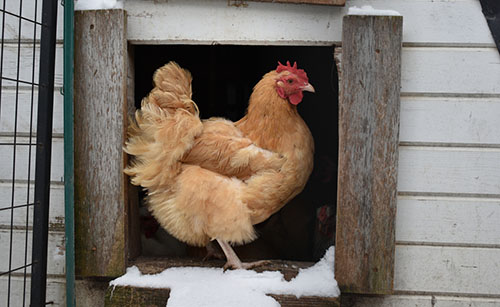

Your chickens don’t like the cold any more than you do. This time of year, they are often still in the stages of seasonal feather loss and their reproductive systems have taken a rest. Most chickens actually stop laying eggs during molting as they channel all of their available energy and protein into growing out their feathers.
 
Their increased nutritional needs are often not adequately met due to winter dormancy, which leaves fewer opportunities for your chickens to forage. It may be necessary to supplement your chickens’ diet with extra goodies to keep them healthy through the winter.
 
With the onset of freezing temperatures come new concerns for maintaining your chickens’ health and weight, but following these helpful tips are sure to keep your flock thriving!
 
  1. Provide access to greens
Just as for humans, fresh greens are an important source of vitamins and minerals for chickens. Because vegetables from your garden are likely in short supply during this time of year, supplement your chickens’ diet with store-bought greens. Better yet, use this as an opportunity to support your local farmer’s market. Purchase nutritionally-dense, dark greens such as kale, collards, and spinach.
 
  1. Add treats in the coop
Don’t underestimate the power of playtime. Boredom can easily lead to “coop fever,” which may cause bad habits such as egg-eating and feather-pecking. Keep them busy and curious by turning feed time into a game on days that it’s too cold for them to spend time outside. Provide a supplement peck block from your local Co-op to encourage natural pecking behavior. You can also hang a head of cabbage in the coop by a string or stuff some fresh greens in a large suet cage or hanging treat ball.
 
  1. Supplement protein
Alfalfa is a chicken’s best friend. The high-protein forage crop is an excellent supplement to your chickens’ diet to give them the necessary nutrients required for renewing their feathers after molting. Alfalfa comes in a variety of forms such as cubes, loose hay, and pellets. Alfalfa cubes and hay will provide your chickens with the most entertainment and give them another avenue to prevent boredom.
 
  1. Bring on the bugs
Right after a rain, let your chickens out of the coop for a delicious buffet of worms, grubs, and other bugs. The moisture in the ground pushes insects to the top, and chickens love to spend their time scratching, pecking, and devouring them for a snack. You can also purchase dried mealworms or other grubs to toss to your chickens once a day.
 
  1. Clear a path
Chickens are often not big fans of having to walk through snow. If your area gets snow this year, use a shovel to clear a path for your chickens as soon as possible so that they will venture out of their coop. You can even place wooden planks or other objects outside the coop to give them something to perch on to get out of the snow. This will allow them to get a little exercise and boost their morale until the snow melts away.
 
Although winter can be a challenging time, these tried-and-true tips are sure to keep your chickens happy and healthy until spring. For a complete line of poultry supplies such as feed products, supplements, waterers, feeders, and more, visit your local Co-op.
 
For more content like this, check out the latest issue of the Cooperator.

Read More News

Mar 09, 2026
Vegetable gardening has historically had its ups and downs. As far back as the pilgrims, nearly everybody was a gardener. Because people grew food to survive, they developed their own gardening skills out of necessity. During World War II, Americans were encouraged to grow much of their own food in “victory gardens” to help with the expensive war effort. But as more efficient methods of growing larger amounts of food were developed, fewer people raised their own vegetables.
 
Mar 02, 2026
Nothing says spring at the Co-op like baby chicks peeping and scratching in showrooms across the state. Raising chickens continues to grow in popularity, not only among 4-H’ers with poultry projects but also backyard poultry enthusiasts who want to have their own source of eggs and meat. Game bird production is also on the rise.  Now is a great time to plan for these projects and take steps to protect the health of your birds.
Feb 23, 2026
As the seasons change, so do our management practices for equine ownership. Here are a few considerations that are important for horse owners this spring.